


Are you looking for the best smartphones under ₹30000 in 2026? This price range is packed with phones that are seriously powerful, have awesome cameras, and batteries that last forever, and you won’t have to spend a fortune. We have tested smartphones in this price range, comparing their performance, camera quality, battery life, and software experience. Let us break this down.
Realme 15 5G
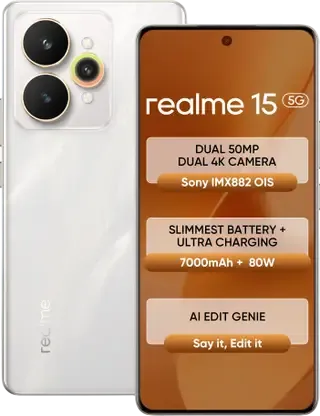
₹29,999

Display
6.8″ | 1.5K OLED | 144Hz

Battery
7000 mAh | 80W

Processor
Mediatek Dimensity 7300+ (4 nm)

Camera
50MP (Wide) | 8MP (Ultra-wide) | 50MP (Front)
Buy Now


The Realme 15 5G is a solid midranger with a great set of features most people will love. It’s powered by the MediaTek Dimensity 7300 Plus, which can handle daily tasks and a bit of gaming. But where this phone really shines is its 7000mAh battery which can last more than a day of heavy use. Add that to its 6.8 inch FHD+ AMOLED display with 144Hz refresh rate and you have a great device for watching movies or just scrolling through social media.
Pros:
- Massive 7000mAh battery for multi-day use
- Vibrant 6.8″ 1.5K OLED display with a 144Hz refresh rate
- Powerful MediaTek Dimensity 7300 Plus processor
- High-resolution 50MP main and selfie cameras
- Good for gaming and multimedia consumption
Cons:
- Realme UI may have some bloatware
- No wireless charging
- No telephoto camera
Poco F7
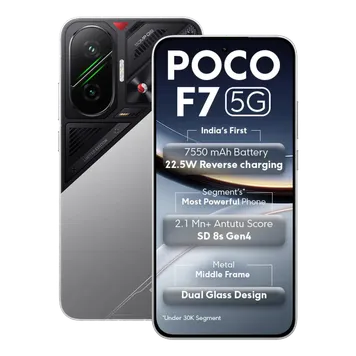
₹31,999
Display
6.83″ | 1.5K AMOLED | 120Hz
Battery
7550mAh | 90W
Processor
Qualcomm Snapdragon 8s Gen 4
Camera
50MP (Wide) | 8MP (Ultra-wide) | 20MP (Front)
Buy Now
Pros and Cons
Pros:
- Flagship-level Snapdragon 8s Gen 4 performance.
- Excellent multi-day battery life (7,550mAh in India).
- Blazing 90W fast charging.
- Stunning 1.5K 120Hz AMOLED display.
- Impressive IP66/IP68/IP69 durability.
- Latest Android 15 with long software support.
- Super-fast UFS 4.1 storage.
Cons:
- Average ultrawide camera performance.
- No wireless charging.
- No 3.5mm headphone jack.
- Can be a bit heavy/bulky.
Oppo K13 Turbo
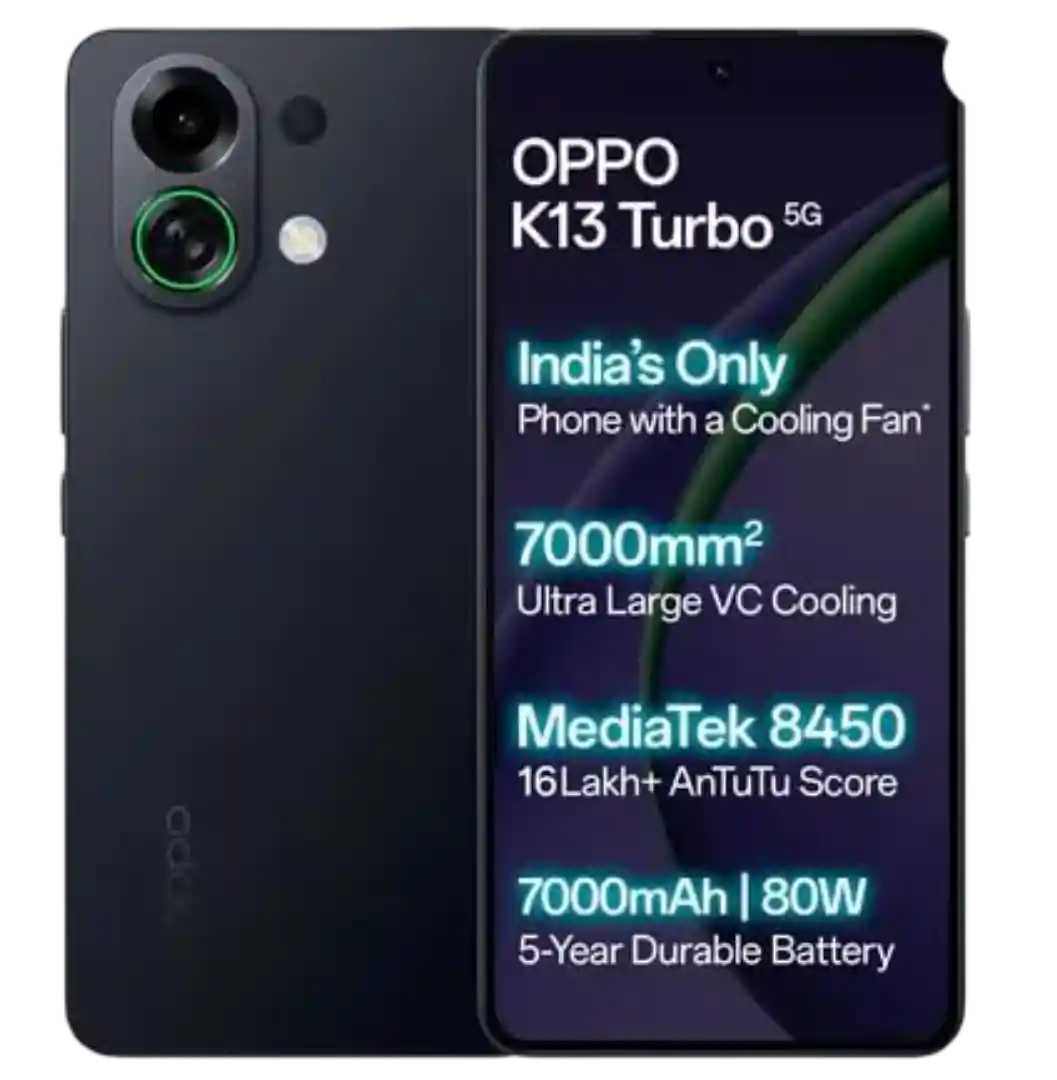
₹27,999
Display
6.8″ | 1.5K AMOLED | 120Hz
Battery
7000mAh | 80W
Processor
MediaTek Dimensity 8450
Camera
50MP (Wide) | 2MP (Monochrome) | 16MP (Front)
Buy Now
Pros and Cons
Pros:
- Cutting-edge MediaTek Dimensity 8450 (4nm) processor
- Massive 7000mAh battery for 2+ days of heavy use
- Vibrant 1.5K 120Hz AMOLED display (1600 nits peak)
- Built-in active cooling fan for sustained gaming performance
- Impressive IP66/IP68/IP69 water and dust resistance
Cons:
- ColorOS 15 comes with significant pre-installed bloatware
- Lacks a dedicated telephoto or ultra-wide lens (2MP secondary only)
- Slightly heavier (207g) due to the large battery and fan system
iQOO Neo 10R

₹26,999
Display
6.78″ | 1.5K AMOLED | 144Hz
Battery
6400mAh | 80W
Processor
Qualcomm Snapdragon 8s Gen 3
Camera
50MP (Wide) | 8MP (Ultra-wide) | 32MP (Front)
Buy Now
Pros and Cons
Pros:
- Powerful Snapdragon 8s Gen 3 chipset
- Smooth 144Hz refresh rate display
- Excellent gaming performance
- Good low-light camera performance
Cons:
- Heavier than competitors
- Funtouch OS has learning curve
Vivo T3 Ultra

₹27,999
Display
6.78″ | 1.5K AMOLED | 120Hz
Battery
5500mAh | 80W
Processor
MediaTek Dimensity 9200 Plus
Camera
50MP (Wide) | 8MP (Ultra-wide) | 50MP (Front)
Buy Now
Pros and Cons
Pros:
- Excellent 50MP Sony IMX921 main camera
- Bright 4500-nit AMOLED display
- Premium Dimensity 9200+ processor
- 50MP high-resolution selfie camera
Cons:
- No wireless charging
- Vivo’s software has ads
Moto Edge 60 Pro

₹29,999
Display
6.7″ | 1.5K P-OLED | 120Hz
Battery
6000 mAh | 90W
Processor
Mediatek Dimensity 8350 Extreme (4 nm)
Camera
50MP (Wide) | 10 MP (telephoto) | 50MP (Ultra-wide) | 50MP (Front)
Buy Now
Pros and Cons
Pros:
- Great 120Hz HDR10+ Display
- Fast Performance
- Versatile 50MP Triple Camera
- High-Res Selfie Cam
- Big Battery, Fast Charging
- Long Software Support
- Durable (IP68/69)
Cons:
- Plastic Frame
- Potentially Heavy
Nothing Phone (3a) Pro

₹28,100
Display
6.7″ | 1.5K P-OLED | 120Hz
Battery
6000 mAh | 90W
Processor
Qualcomm Snapdragon 7s Gen 3 (4 nm)
Camera
50MP (Wide) | 10 MP (telephoto) | 50MP (Ultra-wide) | 50MP (Front)
Buy Now
Pros and Cons
Pros:
- Clean Android (Nothing OS)
- Smooth, Bright 120Hz AMOLED
- Good 50MP Main Cam (OIS, PDAF)
- Dedicated 50MP 3x Zoom Telephoto (OIS)
- Long Software Support
- Fast 50W Charging
Cons:
- Plastic Frame
- UFS 2.2
Best Smartphones Under ₹30000: Full Comparison Table
| Phone Model | Price (₹) | Processor | Display | Camera (Rear) | Battery & Charging |
| Realme 15 5G | ₹29,999 | Dimensity 7300+ | 6.8″ 1.5K 144Hz OLED | 50MP + 8MP | 7000mAh, 80W |
| Poco F7 | ₹31,999 | Snapdragon 8s Gen 4 | 6.83″ 1.5K 120Hz AMOLED | 50MP + 8MP | 7550mAh, 90W |
| Oppo K13 Turbo | ₹27,999 | Dimensity 8450 | 6.8″ 1.5K 120Hz AMOLED | 50MP + 2MP | 7000mAh, 80W |
| iQOO Neo 10R | ₹26,999 | Snapdragon 8s Gen 3 | 6.78″ 1.5K 144Hz AMOLED | 50MP + 8MP | 6400mAh, 80W |
| Vivo T3 Ultra | ₹27,999 | Dimensity 9200+ | 6.78″ 1.5K 120Hz AMOLED | 50MP + 8MP | 5500mAh, 80W |
| Moto Edge 60 Pro | ₹29,999 | Dimensity 8350 Extreme | 6.7″ 1.5K 120Hz P-OLED | 50MP + 50MP + 10MP | 6000mAh, 90W |
| Nothing Phone (3a) Pro | ₹28,100 | Snapdragon 7s Gen 3 | 6.7″ 1.5K 120Hz P-OLED | 50MP + 50MP + 10MP | 6000mAh, 90W |
Which One Should You Buy?
- Best All-Rounder – A Phone That Does It All: The Moto Edge 60 Pro is the one we all wish for – a design that just works, and some camera that can actually handle anything you throw at it. Want a change of pace? The Realme 15 5G has a screen that’s drop dead gorgeous and battery that should last you a really long time
- For Speed : The Poco F7 is the fastest here with its amazing -the -latest Snapdragon 8s Gen 4 chip. This thing can deal with whatever you want to throw at it; you can’t go wrong with the iQOO Neo 10R which is pretty impressive at juggling apps – and the Oppo K13 Turbo is a good option if MediaTek is what you prefer.
- Best Battery Life: Poco F7 takes the crown with an absolutely massive 7,550mAh battery – you won’t be needing to charge it for ages. The Realme 15 5G and Oppo K13 Turbo aren’t far off with their 7,000mAh each, and even the iQOO Neo 10R’s 6,400mAh will happily see you through at least two days with no worries.
- For Gamers : If gaming is your thing, the Oppo K13 Turbo is your go to – that built-in cooling fan is the real deal & the Poco F7 and iQOO Neo 10R run games super smooth too.
- Best Cameras : Nothing Phone (3a) Pro takes it all with that 3 times periscope zoom alone Moto Edge 60 Pro has a nice set up though – and the Vivo T3 Ultra still has no equal when it comes to those all important Selfies and portraits.
- Cleanest Experience – Sick of all the rubbish that phones bring with them ? Nothing Phone (3a) Pro is what you need – just software that just works
Final Thoughts:
The ₹25,000–30,000 segment is more competitive than ever, offering near-flagship specs at mid-range prices. Whether you prioritize performance, battery, camera, or software, there’s a perfect pick for you. Which one are you buying? Let us know in the comments!

No comments yet. Be the first to share your thoughts!