
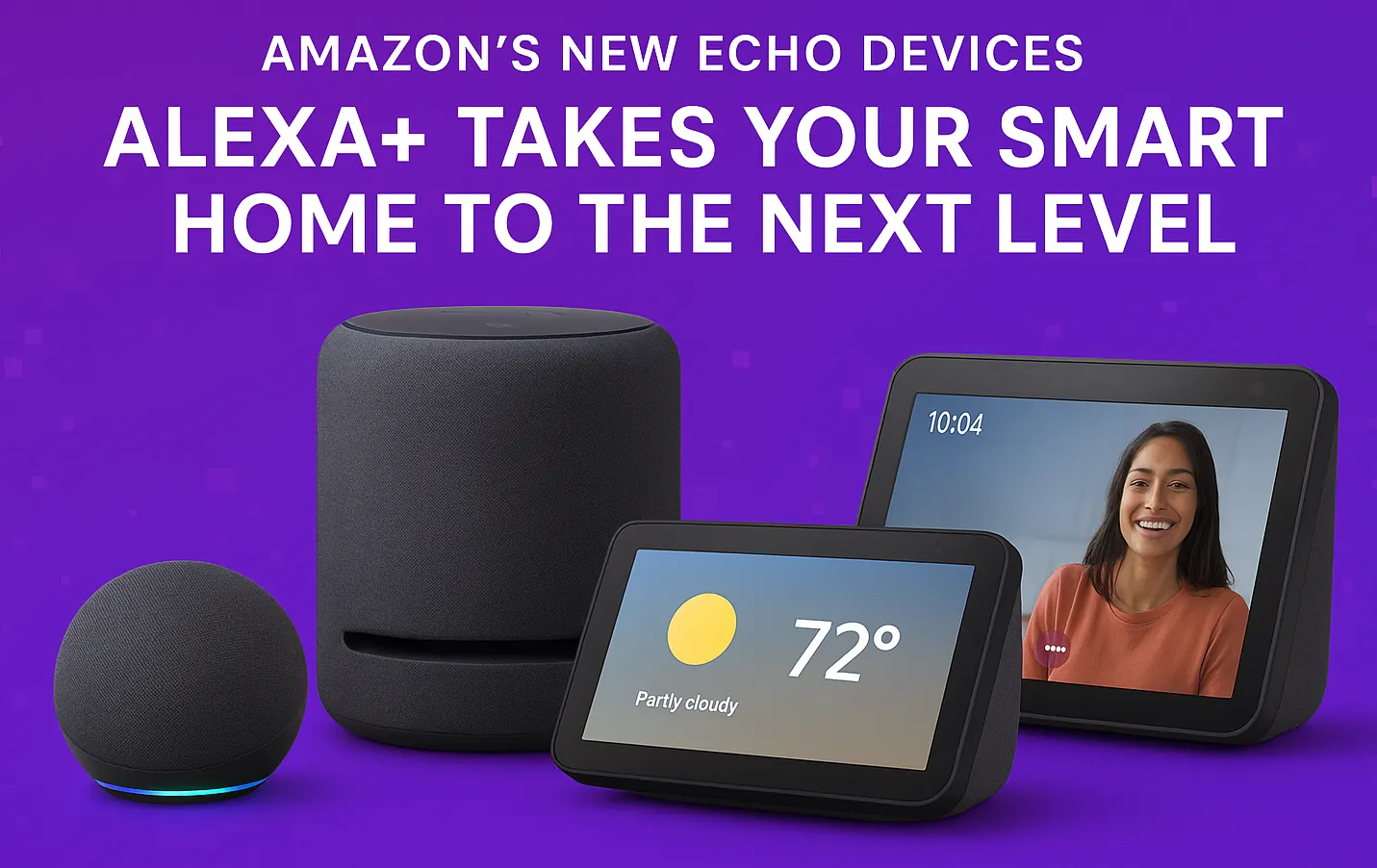

Tired of yelling at your old Echo to dim the lights, only to get Sorry, I didn’t catch that? Meet Alexa+. Amazon’s newest lineup of AI-powered Echo devices is built from the ground up around this next-gen assistant and the result is a smarter, more anticipatory home that finally listens like it means it.
In this article, we will explore what Alexa+ really is and how it is different from old Alexa. Also how the new Echo Dot Max, Echo Studio, Echo Show 8, and Echo Show 11 compare, highlighting both its advantages and disadvantages.
What’s Alexa+ and Why Should You Care?
Switching from “Alexa” to Alexa+ is more than just a marketing stunt. This is sign of Amazon’s entry into generative AI Market with Alexa+ which can carry more natural conversations less ask this exact phrase, suggest context-aware routines, and act proactively — the new Echo can intervene when it detects anything relevant in your environment.
Under the hood, two things make that happen:
- AZ3 / AZ3 Pro chips inside the new devices that allow Alexa+ to run edge AI models locally (so less lag, more privacy for common tasks).
- Omnisense, a sensor fusion framework combining cameras, audio, Wi-Fi radar, ultrasound, accelerometers, and more — enabling the Echo to sense when people walk in, doors are open, or ambient signals change — and respond in a timely way.
In short: Alexa+ is meant to fade into background intelligence — not just respond when prompted, but help when needed.
Echo Show vs. Echo Speakers: The New Lineup at a Glance
Below is a side-by-side look at the four new Echo devices built for Alexa+:
| Device | Key Strengths | Highlights / Trade-offs |
| Echo Dot Max | Best entry-level smart speaker for Alexa+ experiences | AZ3 chip, dual speakers (woofer + tweeter), nearly 3× bass over older Echo Dot lines |
| Echo Studio | Premium audio + spatial experience | Uses AZ3 Pro (so supports heavier AI), compact spherical design, spatial audio + Dolby Atmos support |
| Echo Show 8 | Smart display + compact room companion | Stereo speakers, improved display, 13MP camera, smart visual context via Alexa+ |
| Echo Show 11 | Larger smart display, deeper sensing | Bigger panel, advanced mic/stereo setup, best suited for kitchens / shared spaces |
The AZ3 / AZ3 Pro Difference
Dot Max uses the AZ3, tuned for conversational detection and noise filtering. The other three use AZ3 Pro, which adds support for heavier AI models and vision transformers.
In practice, that means on Dot Max, Alexa+ can do more local tasks with less cloud dependence; on Studio / Show models, it can lean harder on context, visual cues, and predictions.
Spatial Audio, Bass, and Sound Identity
Echo Studio and Dot Max are pushing Amazon’s highest audio ambitions so far. Studio supports spatial audio + Dolby Atmos, letting sounds feel like they float around you in a room.
Dot Max, on the other hand, is surprising — in a good way — for its size. The dual driver architecture gives it punchy bass depth you wouldn’t expect from a “compact” speaker.
Smart display models (Show 8 / 11) prioritize clarity and vocal fidelity; expect fewer “tinny” voice responses and more ambient embedding of smart visuals (e.g. overlaying smart home alerts while playing music).
Omnisense & Proactive Assistant Behavior
Here’s where Alexa+ really tries to shine. Picture this:
- You’re leaving home, and Alexa+ notices your garage door is open. It gently reminds you: “Hey, you forgot your door.” (Yep, no yelling needed.)
- A family member walks in at 10 pm — Echo observes and maybe triggers an ambient light or starts soft “wind-down” music without you asking.
- When the smart display sees your face, it personalizes reminders or background tasks: calendar, weather tailored to you, etc.
That’s Omnisense and ambient computing at work. It’s less flashy than “AI magic,” more subtle but impactful.
Be aware: not every feature is available everywhere at launch, and certain behaviors rely on sensor permission, privacy settings, and network stability.
Who Should Pick Which Echo?
Here’s a (somewhat cheeky) guide:
- Budget / first AI-echo upgrade → Go with Echo Dot Max. You’ll get a capable speaker with the new Alexa+ experience for far less than flagship prices.
- Audiophiles / music lovers → Echo Studio is the pick. Spatial audio, deep bass, and room-filling sound make it worth the extra.
- Bedroom, kitchen, side display zones → Echo Show 8 gives you display + balanced audio in a compact footprint.
- Shared spaces / hubs → Echo Show 11 is your canvas — bigger screen, better visuals, and more presence.
If you’re already deep into Amazon’s smart home ecosystem Ring, smart locks, cameras, lighting, these devices can sharpen your experience. Alexa+ is a natural evolution that leans into generative AI, but it doesn’t abandon Alexa’s prior strengths.
Verdict: Is Alexa+ the Real Deal?
Yes with caveats. If your current Echo mostly plays music or sets timers, the jump to Alexa+ won’t feel revolutionary right away. But if you want a smart home that gently assists, anticipates, and integrates audio + visual intelligence — especially in a multi-room or mixed-device home — these Echo devices push things further than ever before.
Expect a few quirks (firmware updates, sensor calibration, privacy settings to review), but overall, Alexa+ is a meaningful step up. If your use cases involve calls, displays, or making your home feel a little more “aware,” now’s a solid time to upgrade.

No comments yet. Be the first to share your thoughts!